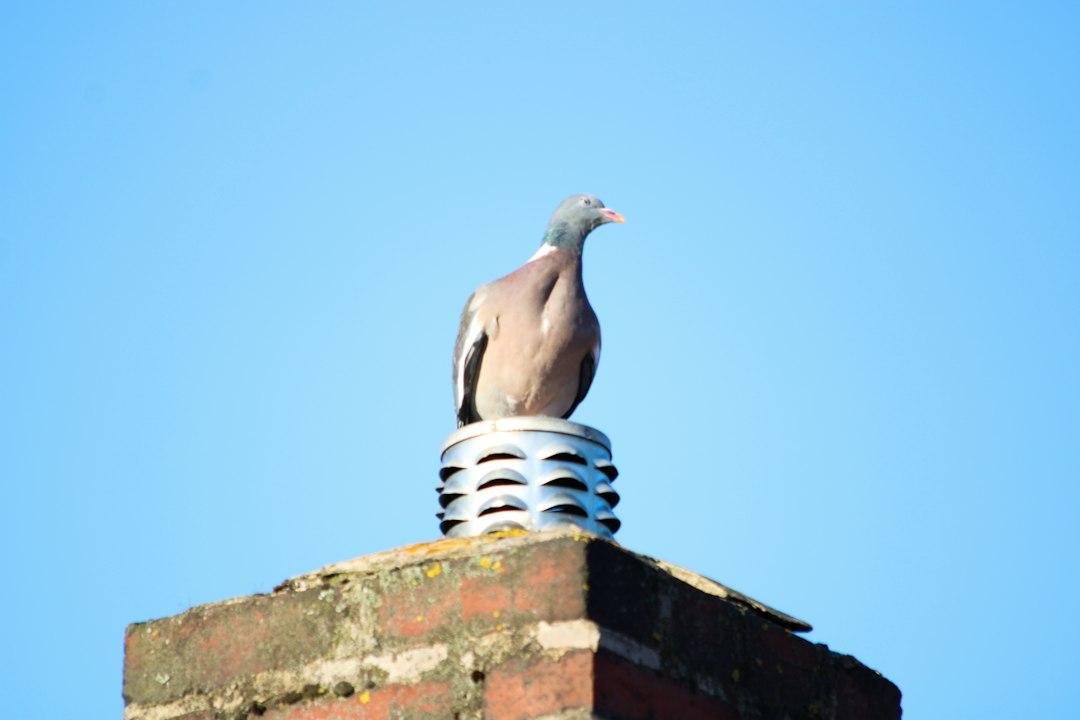
Ask us what a chimney cap costs on a Walnut house and the answer is that it is quoted on site. Caps differ because chimneys differ. A small stainless hood clamped onto one round flue tile is a short job. A crown-mounted cover spanning three flues on a tall stack, made to measure in copper, is a different piece of work altogether. This post covers what moves the price, why the cap matters so much for water, and what you get on paper.
A lid before it is an animal guard
People think of caps as raccoon and bird guards, and they do keep animals out. On the houses we inspect for leaks, though, the cap matters more as a lid. An open flue is a masonry pipe pointed at the sky. Every storm drops water onto the smoke shelf and the damper, and from there it soaks into the masonry around the firebox. The signs show up downstairs long before anyone looks at the roof:
- A damper plate that is orange with rust or frozen in place.
- A sour, wet-ash smell in the room for a day or two after a storm.
- Puddles or tide lines on the firebox floor.
- Black streaks running down the inside walls of the firebox.
- Joints between firebricks that turn sandy when scratched.
None of these means the fireplace is finished. Most stop once the flue has a lid, provided the crown underneath is sound.
What decides the price
Five things set the cap price on a Walnut house:
- How many flues come out of the top. One flue takes a single-flue cap that clamps onto the tile. Two or three flues usually call for one wide cover fastened to the crown.
- The shape of the tiles. Round and standard square tiles take stock sizes. Odd old tiles, or tiles that stand at different heights, need a cap built to measure.
- The metal. Stainless steel suits most houses. Copper costs more and is usually chosen to match other copper on the roof.
- The mount. A crown-mounted cover needs a level, sound crown to fasten to. A crumbling crown has to be dealt with before a wide cap goes on it.
- Getting there. A single-story ranch with a walkable roof is quick. A steep concrete-tile roof or a stack beside a two-story wall takes more setup.
On a factory-built metal chimney, the kind boxed in siding or stucco on many newer houses, the top piece belongs to the maker's tested system. We fit the part made for that chimney, not a universal one, and the price follows that part.
Request a written cap price, and tell us how many fireplaces the house has and what kind of roof sits over them.
What else we look at while we are up there
Fitting a cap takes us onto the roof anyway, so we look at everything near it. The crown gets checked for cracks and for whether it throws water away from the brick or lets it sheet down the face. The top courses of brick get checked for open joints and flaking faces. The flashing gets a look at the roofline. Anything we find goes on the written result with photos and its own price line, and nothing beyond the cap is done unless you approve it.
If the flue has not been inspected in the past year, a Level 1 on the same visit costs $58 and covers the chimney from the firebox up. If the fireplace has been rained on for years, a sweep from $445 clears out the wet soot and debris that pile up on the smoke shelf.
Wind and embers in the hills
Walnut sits below brush-covered hills, and the dry Santa Ana weeks in fall bring strong gusts. Those gusts lift loosely fastened caps clean off the stack, and we find them in gutters and side yards after a windy spell. A cap sized to the tile and fastened properly stays put. Its mesh also stops embers from a brush fire from dropping into the flue, and stops sparks from your own fire from landing on dry slopes nearby.
What the written result shows
After the fitting you receive photos of the top of the chimney before and after, the cap type and size, how it is fastened, and notes on anything else we saw up there. If the crown or the flashing needs work, those findings sit on the same page with their own prices, marked as optional so you can decide later. That page is also handy if you sell the house, since a buyer's inspector will ask what is on top of the flue.
Stainless, copper or galvanized
Hardware-store galvanized caps cost less up front. They also rust, and on a chimney that already has a water problem, a rusted cap sheds flakes into the flue and loses its screen within a few winters. We fit stainless as the standard choice and copper where an owner wants it to match. Either one, measured and fastened properly, should be the last cap that chimney needs for many years.
When a cap is not enough
A cap cannot fix a crown that is broken through, joints that are open on all four faces, or flashing that has rusted at the roofline. If the stain in the house sits beside the chimney rather than inside the firebox, the cap is unlikely to be the whole story. Our post on roofline flashing costs and our leak repair page cover those cases, and the cap installation page describes the fitting itself. Homes in Baldwin Park and Diamond Bar get the same visit.
A good place to start
A cap is one of the least costly ways to stop water at a Walnut chimney, and one of the easiest to price once we have seen the top. To have someone look at yours, head to the contact page and set up a visit.
Found a Stain That Matches This Article?
Parrish Chimney Sweep works out of Walnut and follows water from the room where it shows up to the crown, cap and flashing. You get the cause named and a written price before any repair starts.